You’ve bought a beautiful rug and put it in your room… yet something still feels slightly off. Chances are the rug isn’t the problem. It’s the rug’s placement causing the issue.
Good rug placement matters. It can make furniture feel more or less connected, and can even affect how easily people move through an area.
There’s no one rule for every home, however, so this rug placement guide takes you through it room by room.
Start With the Furniture, Not the Floor
Resist the urge to centre the rug in the room. That’s a simple solution, sure, but it doesn’t always work.
A rug should anchor a furniture grouping or mark out an area with a clear purpose. Run through these queries before you commit to a position for your rug:
- Is the rug in proportion to the furniture around it?
- Is enough of it visible to look deliberate instead of accidental?
- Can you still see some floor around the rug, if it’s a large one?
- Are walking paths and door-swing areas clear?
- Does any furniture sit half-on, half-off the rug in a way that makes them unstable?
The answers to all of these queries except for the last one should be Yes. Only the last item deserves a No.
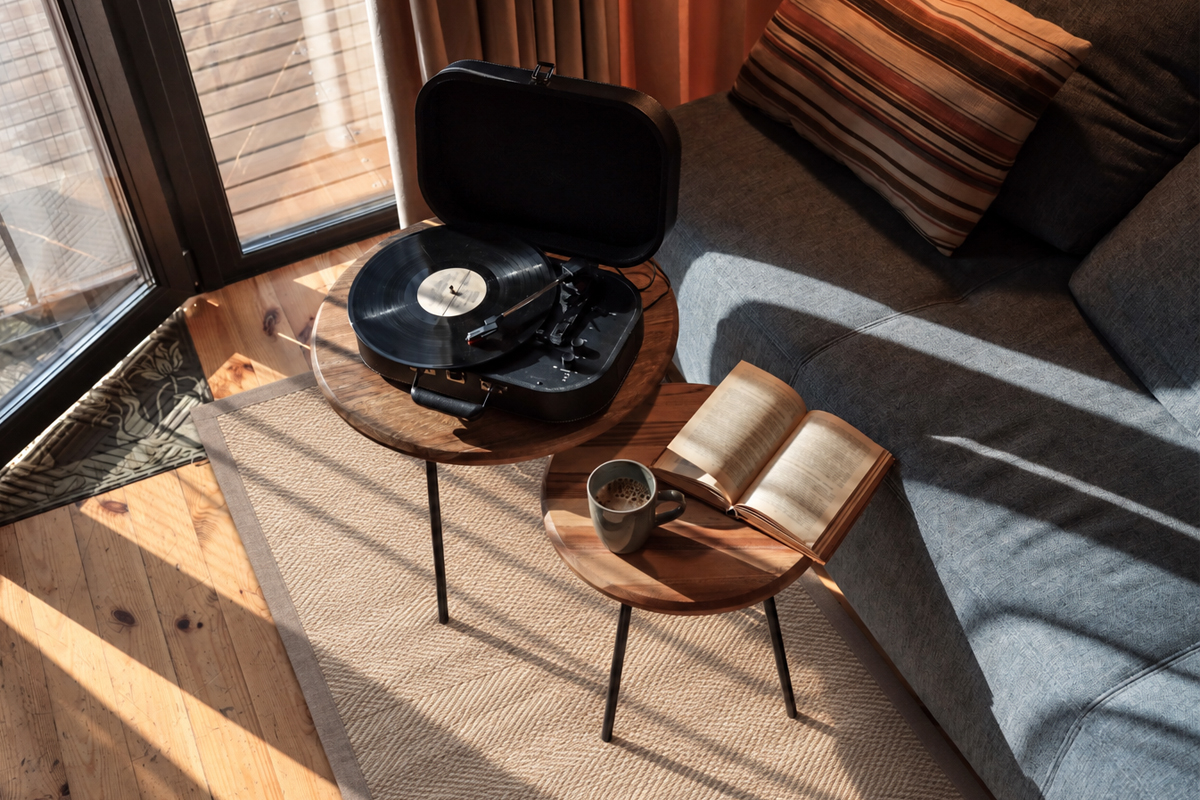
Anchor Furniture Groups for Living Room Rug Placement
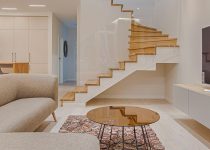
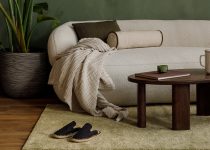
Think of your living room furniture in terms of groups. Your rug should tie the sofa, armchairs, and coffee table into one cohesive group, for example.
To start with, these three layouts work for most homes:
- Front legs on the rug: a versatile choice that tends to be suitable for medium-sized living areas.
- All legs on the rug: a generous look that tends to be best for larger rooms, provided you leave about 25 to 50 cm of bare floor around the rug edge.
- Rug centred under the coffee table: a good option in compact flats if the rug is generously sized.
Avoid tiny rugs that look like they’re floating in the middle of the floor without touching furniture. As a quick tip, when torn between two rug sizes, consider testing the larger option against your furniture first.
Keep Chairs on the Rug in the Dining Room
Centre the rug under the dining table and use the table as your anchor. Extend the rug far enough past the table’s edge on every side that chairs stay on it even when pulled out. Most chairs will be fine with 50 to 60 cm, but it varies, so check to be sure.
The idea is to make certain that the chairs glide smoothly out when diners pull them out to take a seat – they shouldn’t catch on the rug’s edge.
Some steps that can make a big difference here are to choose low-pile or flat-weave rugs for easier chair pull-out and clean-up in case of spills. You may also want to match the rug’s shape to the table if you want the whole set to seem cohesive.
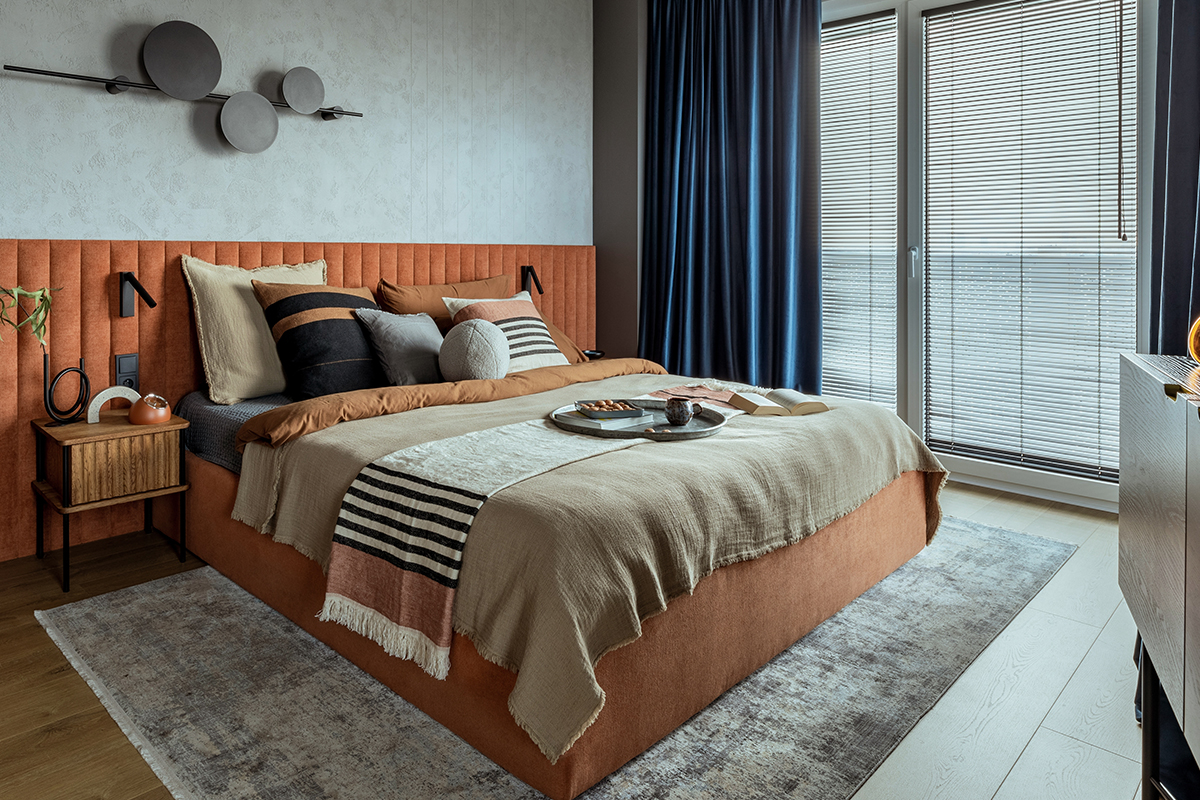
Build Around the Bed for Bedroom Rug Placement
Treat the bed as your anchor in this space. Different placement options are available, such as these common ones:
- A large rug under the whole bed and both nightstands
- A rug starting around two-thirds of the way down the bed, so your feet land on it when you get out of bed in the morning
- Runners on either side of the bed in smaller rooms
Whatever option you choose, consider the furniture nearest or adjacent to the bed first. If you have a bench at the foot of the bed, for instance, look at it first.
The general goal is to avoid hiding almost the entire rug beneath the bed while still using it to keep the bed connected to the other furnishings.
Guide People with Hallway Rugs
In a hallway, let the runner follow the walkway itself. It should guide the eye through the long, narrow space. Leave enough floor visible at the edges too so that the rug looks framed, for a finished look.
Don’t forget to check if doors have space to swing into the hallway, or where flooring changes. The latter matters because it can help you place the rug in a way that reinforces the natural path from one space to the next.
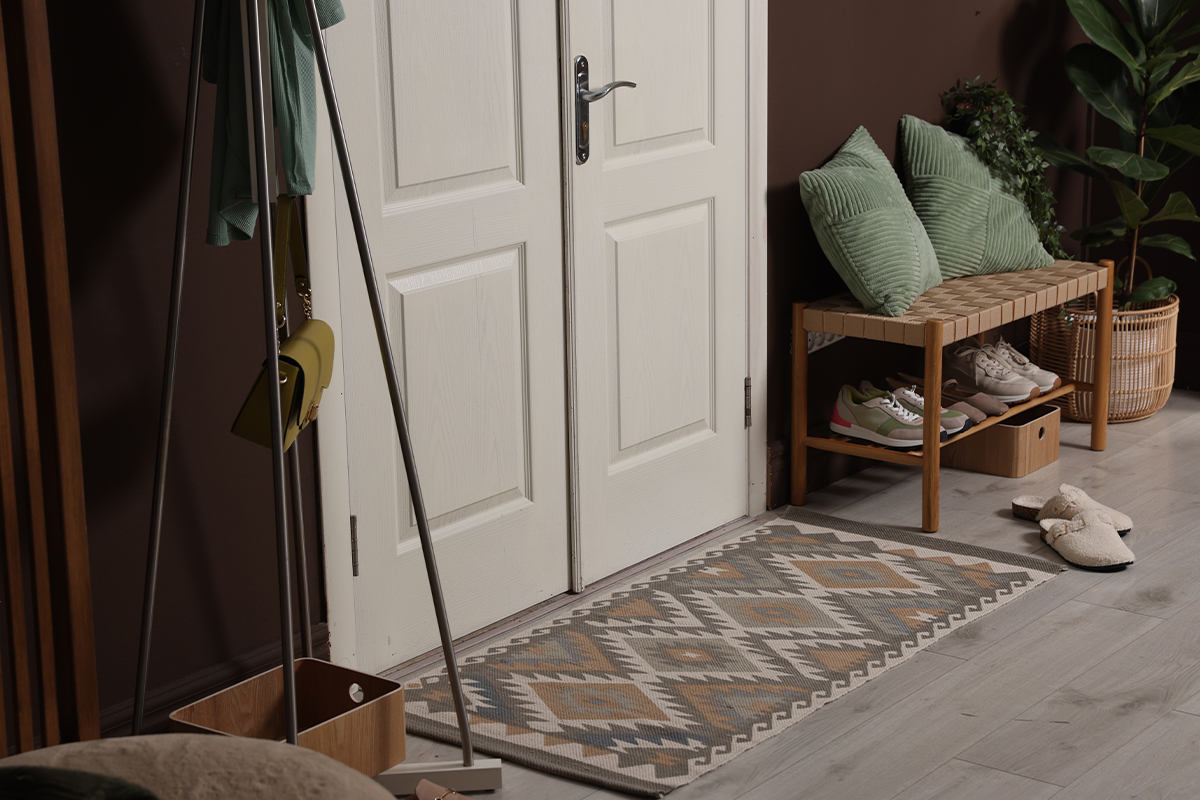
Signal a Welcome with Entryway Rugs
Use these rugs to define the arrival zone without blocking entry or movement. An easy way to do that is to place the rug where people step into the home, not just the plain geometric centre.
As much as possible, the entry rug should visually welcome people into the home while remaining practical. Don’t choose something that looks good but stains if you so much as walk close to it, for instance.
Define Zones in Open-Plan Spaces
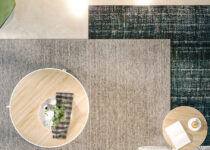
These rugs should create invisible boundaries in such spaces. They can help separate living, dining, reading or conversation areas without adding physical dividers.
Other than that, the same rules apply as for dedicated rooms. Living room rugs still need to connect grouped furniture, and dining rugs still need to permit easy pull-out of chairs.
Simply note that in open-plan spaces, multiple rugs may be visible together. This means you should make positioning feel deliberate by using smart zoning and grouping arrangements. Ensure enough separation between zones too.
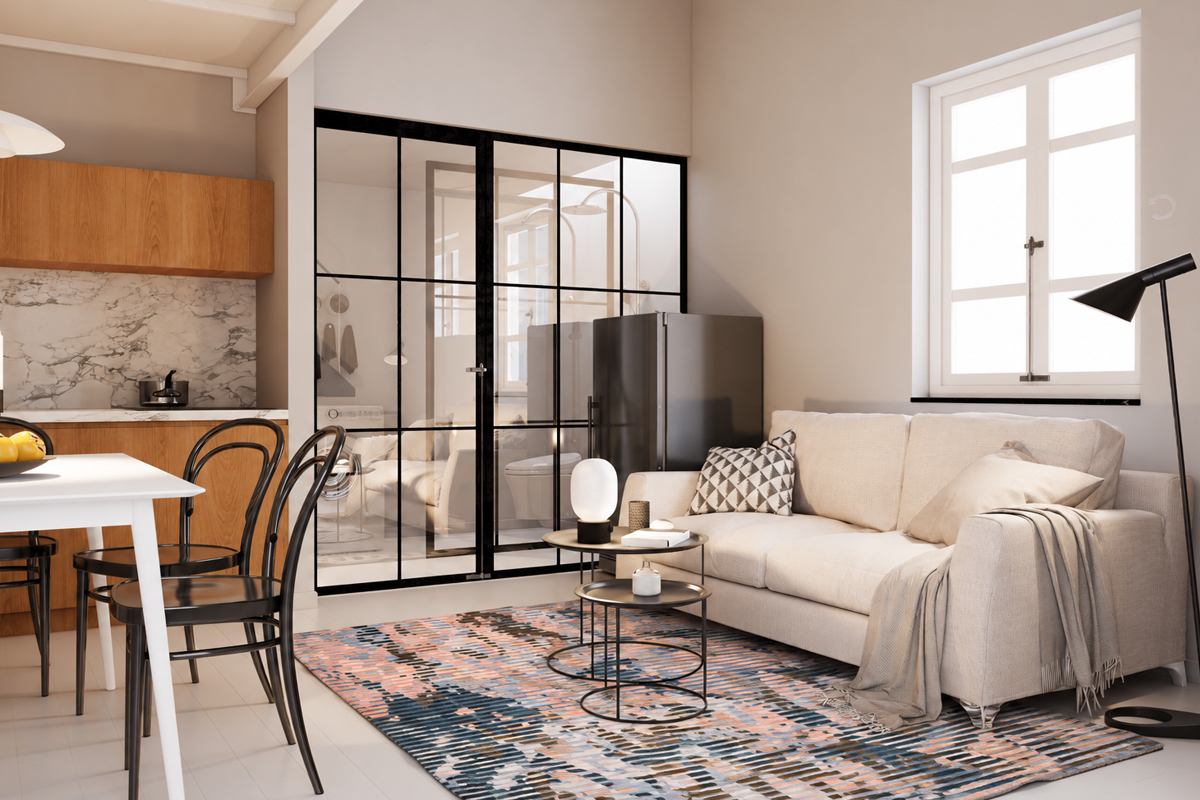
How Much Floor Should Show?
Rugs rarely need to reach walls. As noted earlier, you should aim for 25 to 50 cm of visible floor around the rug to give it a properly framed look and let the arrangement breathe.
Treat that as a starting point only, however. The right number always depends on your room size and layout. Aim for whatever prevents your rug from looking like poorly sized wall-to-wall carpeting.
Common Rug Placement Mistakes
Most problems come down to a handful of errors:
- A rug too small for a furniture grouping
- A rug floating alone in middle of room
- Centreing the rug in the room instead of the furniture
- Dining chairs falling off the rug when pulled back
- Too little rug visible around the bed
- Blocking doors with the rug
- Disrupting main walkways with the rug
- Pushing an area rug too close to walls
- Using several rugs in an open-plan space without clear zoning
When Standard Rugs Don’t Fit
We said earlier that in many cases, the placement is the problem instead of the rug. However, there are cases when the opposite is true.
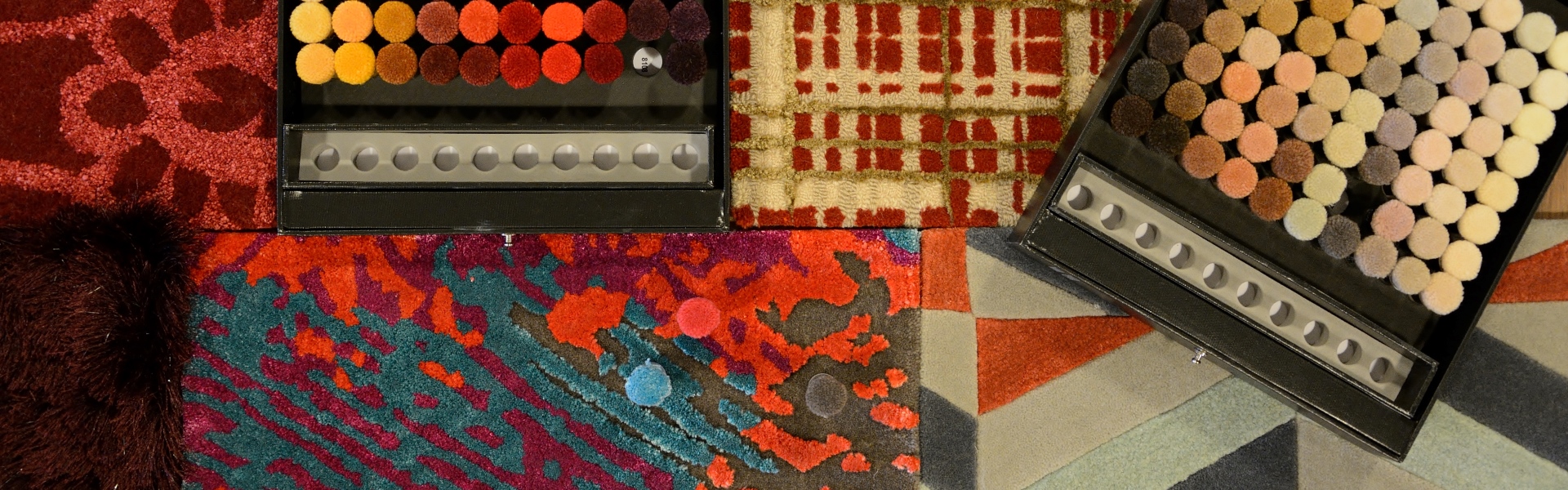
Situations like oversized dining tables or irregularly shaped rooms may make ready-made rugs unsuited to your rooms. That’s where The Rug Maker can help.
Rather than forcing your room to suit a ready-made rug, the team designs around your actual furniture, layout, dimensions, and more. Everything is shaped by your space and how you live in it.
This is because good rug placement is about connecting furniture, defining zones, and maintaining comfortable movement in ways shaped by how you use the space. Sometimes, you need a unique and personalised rug to do that effectively.
Reach out to us if you need advice on a rug designed specifically to suit your home’s layout or needs. Our team would be happy to guide you through the options.