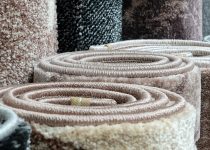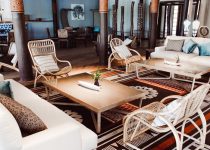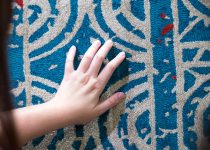
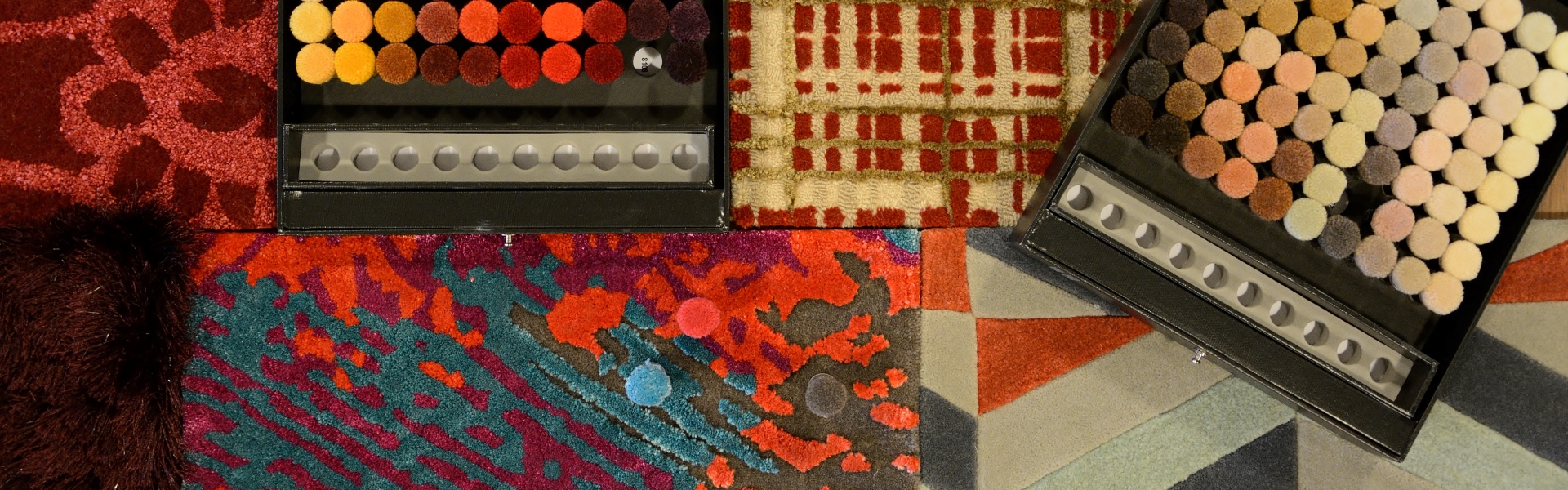
If you’ve ever stood in your HDB living room and felt that something was missing, the answer is very likely a rug.
In a compact HDB interior design context where floor space is precious, the area rug is a powerful tool for making a room feel finished and intentional. It’s precisely why so many of the living room design ideas Singapore homeowners try fail without one.
Why Area Rugs Matter in Your HDB Living Room
Rugs do many things aside from look good. They change how a room feels, anchor sofa areas, and soft hard tile or vinyl underfoot.
They can also draw the eye inward for a seating area, helping it read as a cohesive whole instead of a scattering of individual and unrelated pieces.
In open-plan HDB layouts where living and dining share a single unbroken space, rugs can also serve as room dividers without needing walls or partitions.
This is all to say that good area rugs are multi-purpose decor tools that can boost visuals while also enhancing your enjoyment of a space.
Styling Tips for HDB Living Room Rugs
1. Choose the Right Size
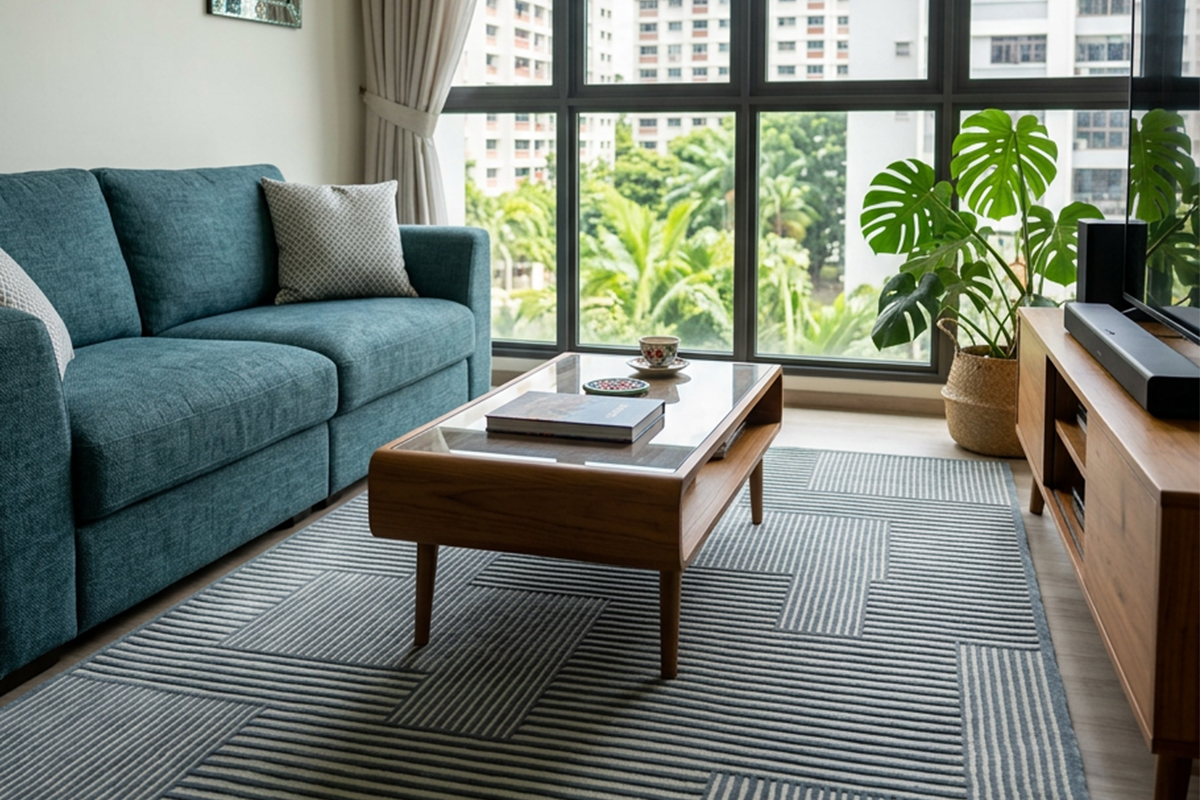
The most common misstep in HDB living room design ideas? Choosing a rug that’s too small.
One that floats in the middle of the room, untouched by furniture, can make a space feel disconnected and smaller. For most HDB layouts, the goal is to make furniture visually grouped and anchored. Avoid anything that makes items look like they’re floating.
2. Place to Improve Flow, Not Block It
Three placement approaches work well in compact living rooms:
- Front sofa legs on the rug
- Coffee table centred squarely on it
- Rug aligned flush with the TV console wall to keep the seating zone framed
Whichever you choose, ensure the rug doesn’t encroach on the walkways. Clean foot traffic paths are a must or the space will feel tight.
3. Use a Rug to Define Zones
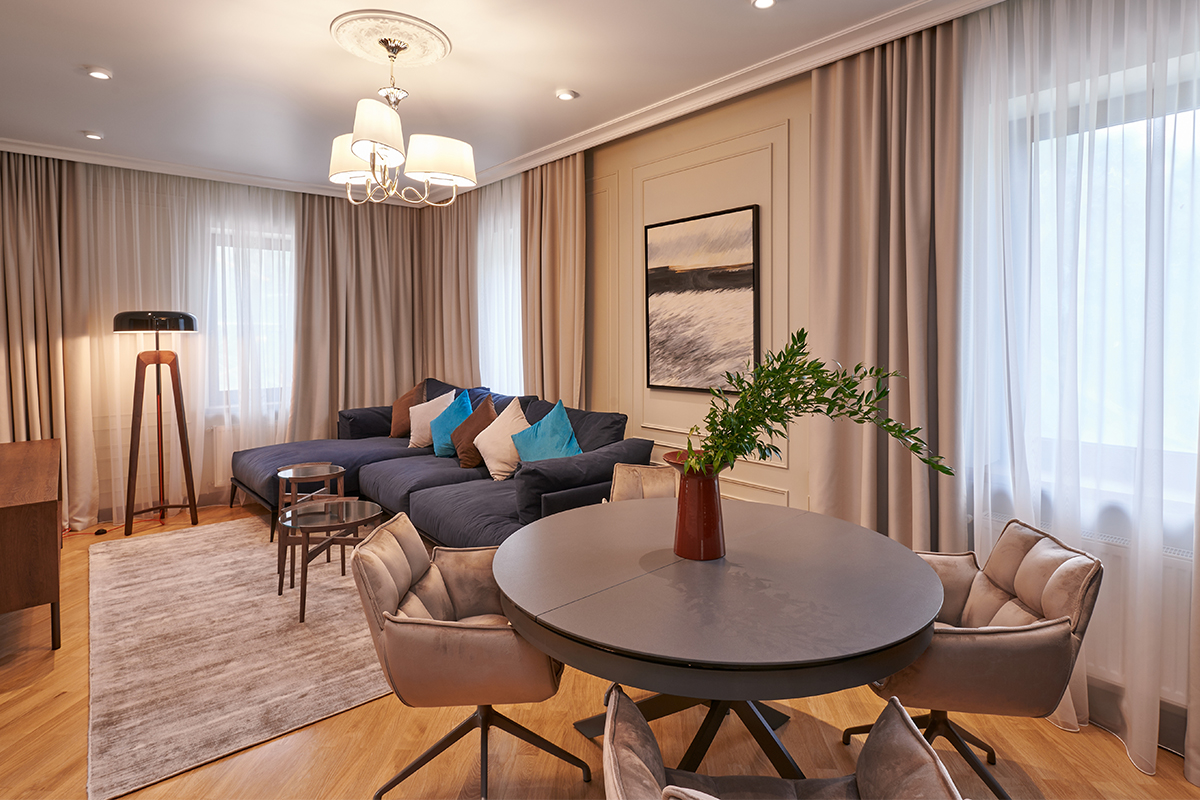
If your living and dining areas flow together without a partition, use a rug to signal where one zone ends and another begins.
Place the rug squarely within the sofa grouping and let the dining area breathe on bare floor. You can also use a second rug beneath the dining table to echo the effect.
4. Pick Colours That Lift the Room
For compact or low-lit HDB spaces, lighter tones are your allies. Warm beige, soft stone, dusty sage, and muted ivory are all good options. They help the floor recede visually and make the room feel bigger and airier.
Your rug should also tie back to at least two other elements of the room (like the sofa upholstery or your curtains’ colours) so that the palette reads deliberate and considered.
5. Use Pattern with Restraint
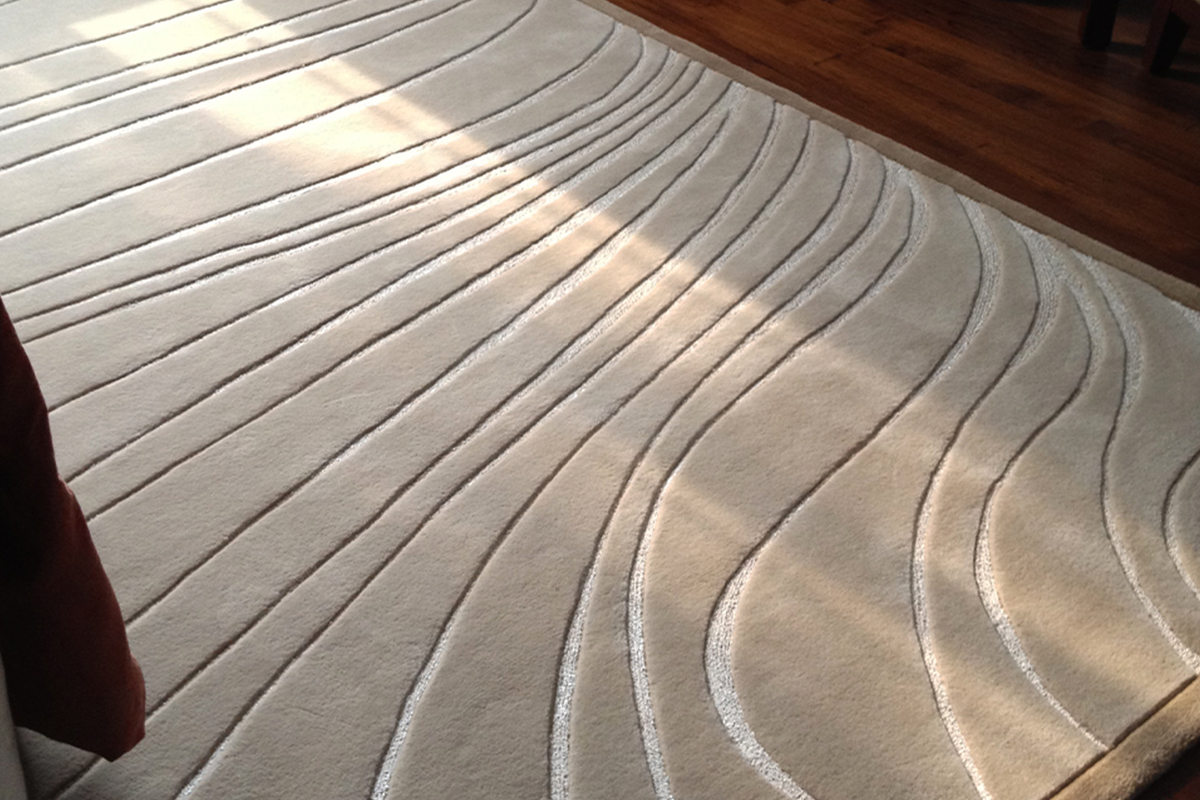
Small rooms turn busy quickly. If you want a pattern, choose something with low contrast. Think of tonal geometrics, subtle weaves, or textured neutrals that add interest without noise.
Bold and high-contrast patterns tend to work better in larger rooms where they have space to breathe.
6. Match the Material to Your Life
HDB living rooms are high-use spaces. They see family, guests, kids, pets, and maybe even a robot vacuum.
Think of things like that when choosing your rug’s material. Wool offers natural resilience and a soft handle. Synthetics like polypropylene often clean easily and resist staining.
Remember to think of the pile too. As much as possible, keep the pile height low to medium, as you’ll want to avoid rugs that trap dust and are harder to clean. There’s no point getting a stunning rug if it stops looking stunning too quickly.
7. Add Texture for a Layered Feel
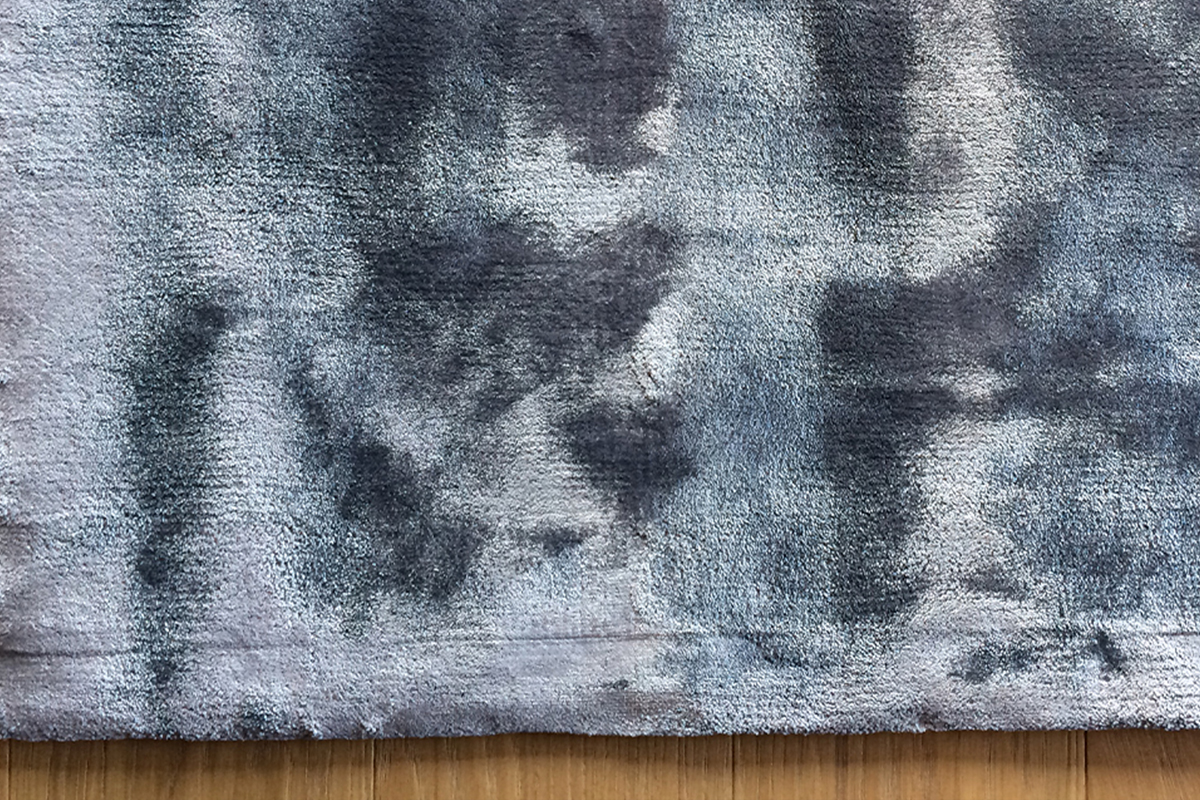
Texture is what separates a room that looks expensive from one that merely looks tidy. A woven flatweave or subtly ribbed synthetic can add dimension without adding extra clutter.
If your room is already neutral, for example, try a textured rug in a similar tone. It’s a quiet but effective upgrade that adds layering and softness to a space.
8. Layer Rugs to Define Open Spaces
Layering a smaller accent rug over a larger base rug is actually a pretty good move in some open-plan layouts. It’s good for marking out specific zones and adding structure to otherwise empty rooms.
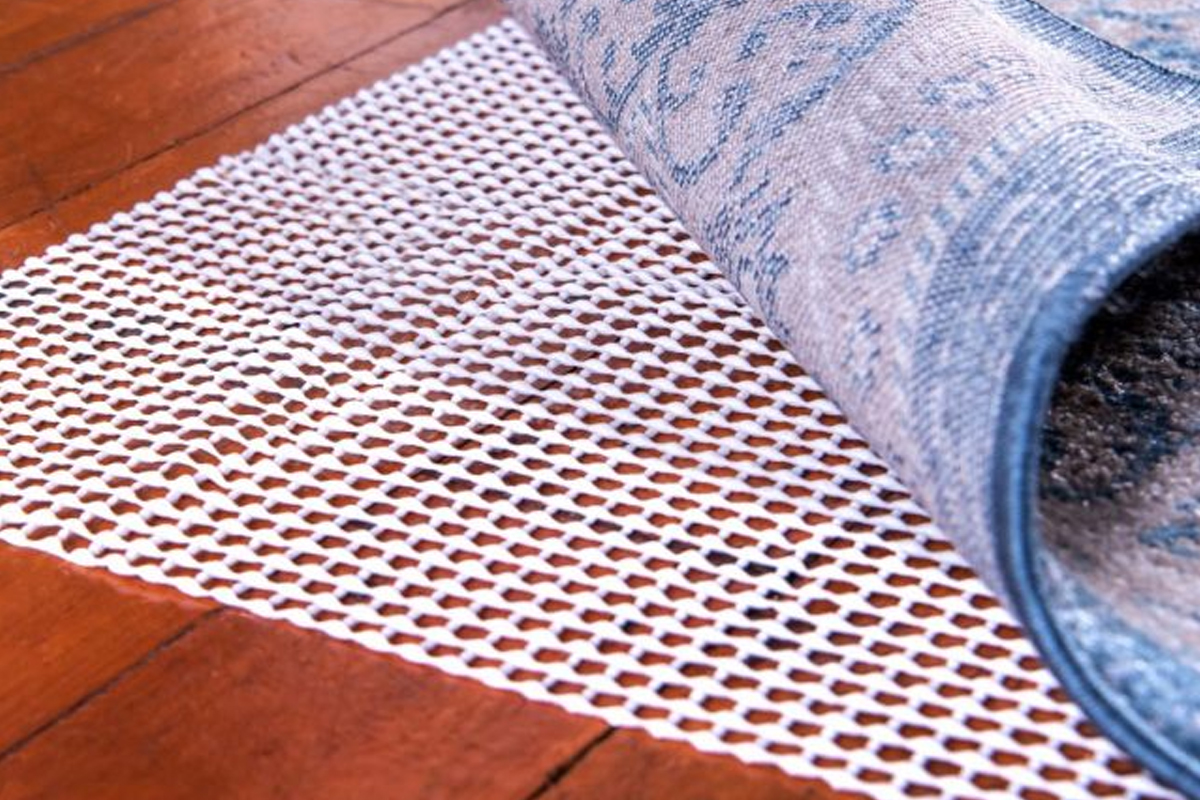
9. Secure the Rug Properly
A rug that slides on tile or marble is a safety hazard. One that buckles looks slovenly. Fortunately, this is easily solved by choosing rug pads or rugs with proper non-slip backing.
Common Mistakes to Avoid
Here are some common mistakes to avoid when buying rugs for an HDB living room:
- Buying rugs without taking measurements first.
- Buying rugs online without seeing samples of the colour in person.
- Buying based on design without measuring spaces.
When a Custom Rug Makes More Sense
Standard rug sizes are for generic spaces and HDB living rooms aren’t always that. In many cases, an off-the-shelf rug will fit awkwardly.
This is where a bespoke rug earns its place. The Rug Maker specialises in custom rugs sized and designed for the exact space they will live in, colour-matched to your items. Even the material is your choice, based on your household and lifestyle.
The right area rug turns a living room from a collection of furniture into a space that feels complete and uniquely yours. If you would like a rug made to measure for your HDB layout and palette, explore bespoke options with The Rug Maker.